

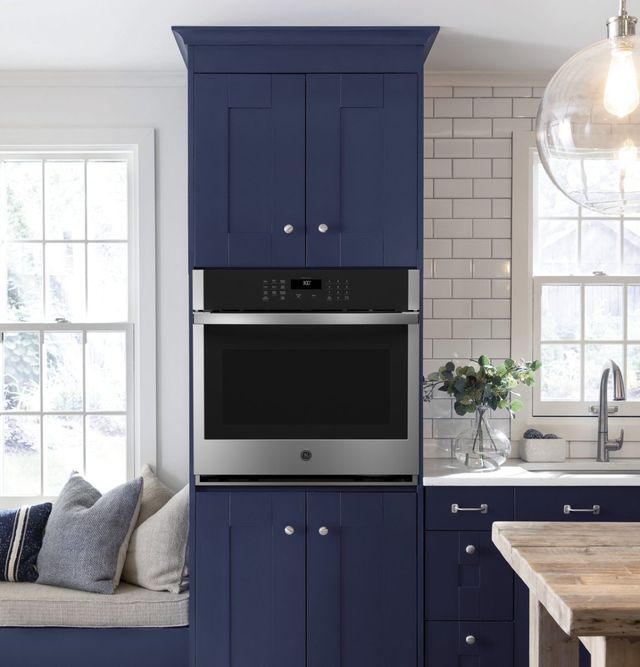
Thanksgiving morning comes down to a scheduling problem nobody wants to solve at seven in the morning. The turkey needs 325 degrees for four hours, the scalloped potatoes want 375, the rolls need 425 for twelve minutes, and there is exactly one cavity. Somebody ends up holding a pan on the porch step because it is 28 degrees outside and that counts as a warming drawer. The same cook already knows to rotate every sheet pan halfway through, because the back right corner of that oven has browned faster than the rest of it for six years. Wall ovens solve both of those problems, but only if the configuration, the convection design, and the cabinet cutout all line up.
Compare Wall Oven Brands Side by Side in Our Showrooms
Our appliance team helps central Wisconsin cooks match configurations, cutouts, and brands to real kitchens and real remodels every week. Shop wall ovens, cooktops, and full kitchen suites with delivery, installer coordination, professional installation, and haul-away handled locally.
There is a clear path through this, and it starts with a tape measure rather than a brand name. At Furniture & ApplianceMart, our showrooms in the Wausau, Stevens Point, Wisconsin Rapids, Marshfield, and Appleton areas let you open doors, pull racks, and compare control interfaces from several brands standing next to each other, and our team can talk through what your existing cabinet opening will and will not accept. This guide covers configurations and sizes, the features that genuinely change how you cook, an honest brand-by-brand breakdown, reliability and service, budgeting for the installed cost, and what to confirm before delivery day.
Key Takeaways
- The cabinet cutout sets your shortlist: Existing openings are commonly 24, 27, or 30 inches wide, and changing width classes means cabinetry work before the new unit goes in.
- Convection design decides your results: True or European convection with a third heating element around the fan bakes far more evenly across multiple racks than fan-only convection.
- Several brands share parents and platforms: Wolf and Sub-Zero, Thermador and Bosch and Gaggenau, and GE Profile with Café and Monogram all sit under shared ownership, which affects parts and service more than most shoppers realize.
- Installed cost is the real number: Cabinet modification, electrical work, and haul-away regularly add hundreds to a wall oven project that looked settled at the sticker price.
Wall Oven Configurations and Sizes Explained

Four configurations cover nearly every kitchen, plus two companion units that show up in larger projects.
- Single wall oven: One full cavity. The straightforward replacement and the least expensive to buy and install.
- Double wall oven: Two full cavities stacked vertically, each with its own controls. Two temperatures at once, which is the holiday answer.
- Combination wall oven: A full oven paired with a microwave or speed oven in one stacked unit, occupying a single tall cutout.
- Standalone steam ovens and warming drawers: Companion units that add capability alongside a primary oven rather than replacing it.
Cutout Widths and Why They Rule Everything
Standard cutout widths run 24, 27, and 30 inches. The existing opening in your cabinetry is almost always the single biggest constraint on what you can install, because moving from a 27-inch class to a 30-inch class means a cabinetmaker cuts and refinishes the opening. That is real money and real scheduling, and it is the item most often left out of a shopper’s mental budget.
Capacity in cubic feet translates into practical questions: how many racks fit, whether a half sheet pan clears the cavity walls, and whether a large roasting pan fits with room for air to move around it. A double oven splits its total capacity between two cavities, so each individual cavity is smaller than a comparable single oven. If you cook one large item more often than two medium ones, that math matters.
Fuel and power are simpler than for a range. Electric wall ovens dominate the category, gas built-in ovens exist but are far less common, and most electric units require a dedicated 240-volt circuit with amperage specified by the model.
When a Wall Oven Beats a Range
A built-in oven separates the cooking zones, so someone can work the cooktop while someone else pulls a pan from an oven mounted at chest height instead of at floor level. That height difference is the ergonomic argument, and it is a large one for anyone with a bad back or bad knees. It also frees the cooktop to move to an island or a peninsula, which opens up layouts a range cannot.
Be honest about the conversion though. Replacing a range with a wall oven plus a separate cooktop means cabinetry work in two places, plus electrical work, and it is a remodel rather than an appliance swap.
Match the setup to how you actually cook. Batch baking and holiday hosting point to a double oven. A small kitchen where cabinet space is precious points to a combination unit, since it puts oven and microwave in one cutout. A household that cooks simply most nights is well served by a single wall oven and the budget it saves.
The Features That Actually Change How You Cook

Some features change your results. Others change your marketing brochure.
Read more:
8 Double Oven Features Home Cooks Love
Counter Depth vs Standard Refrigerators: What's the Difference?
Heating and Airflow
True convection, sometimes called European convection, adds a third heating element wrapped around the fan so the air entering the cavity is already heated. Fan-only convection just circulates air heated by the existing bake and broil elements. The difference shows up on multi-rack baking, where true convection browns three sheets of cookies evenly and fan-only convection still favors one rack. If you bake, this is the specification to prioritize over almost anything else.
Cooking Modes and Precision
Temperature probes let you cook a roast to internal temperature rather than to time, which is the single most reliable improvement to a holiday meal. Guided cooking programs walk through a recipe and set the modes automatically. Proofing modes hold a low, humid temperature for bread dough. Air fry modes run high-heat convection with a specialized rack. Dehydrate settings hold very low heat for hours. Temperature calibration lets you correct an oven that runs consistently hot or cold.
Steam, Honestly
Steam assist injects moisture during a bake cycle, which is what gives artisan bread a crackling crust and keeps a roast from drying at the edges. A full steam oven cooks with steam alone, which is excellent for vegetables and fish and useless for browning. Combi-steam units combine steam with convection heat and are the most capable and most expensive of the three. Steam earns its cost for people who bake bread regularly or cook a lot of proteins; for everyone else it becomes an unused mode.
Speed and Combination Cavities
A speed oven or microwave combination cavity handles reheating, defrosting, and quick weeknight cooking in the upper cavity while the lower cavity stays free for real baking. In a household where weeknight dinner is a genuine time crunch, this configuration earns its place daily.
Cleaning
- Pyrolytic self-clean: Heats the cavity to extreme temperature and reduces residue to ash. Most effective, takes two to four hours, produces odor, and the heat is hard on electronic controls over many cycles.
- Steam clean: A short low-temperature cycle with water in the cavity floor. Gentle, quick, and only effective on light soil.
- Catalytic liners: Coated panels that oxidize splatter during normal cooking. Passive and modest in effect.
Doors, Racks, and Controls
Soft-close doors stop a heavy door from slamming. French doors open from the center with one hand, which is genuinely useful when the other hand is holding a roasting pan. Side-swing doors help in tight spaces and next to a wall. Telescopic glide racks roll a heavy pan out smoothly instead of making you reach into a hot cavity. Halogen or LED interior lighting quality varies more than you would expect between brands. Controls range from knobs to full-color touch displays, and knobs remain easier to operate with a wet hand.
Connectivity is where honesty helps. Remote preheat gets used. App notifications get used. Built-in cameras and voice control are novelties for most households after the first few months. Treat connectivity as a tiebreaker, never as a reason to spend up a tier.
The worth-it framework is simple: if you cook most nights, pay for true convection, a probe, and telescopic racks. If you cook occasionally, a solid single oven with good convection and a self-clean cycle covers everything you will actually use.
Brand-by-Brand Breakdown of Top Wall Oven Makers
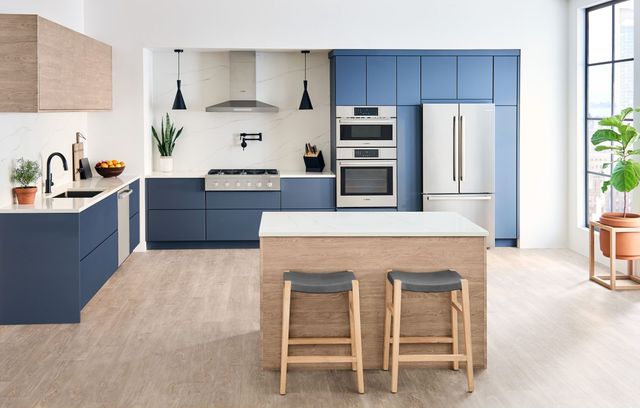
Wolf comes from professional kitchen heritage and builds around dual convection with two fans and heating elements for exceptionally even multi-rack results. Its cooking mode range is deep, the red knob option is a signature design element, and the whole cooking suite is designed to look consistent. Luxury tier, aimed at serious cooks who want commercial-style performance in a residential kitchen.
Thermador is European luxury with a strong steam and combi-steam program, guided cooking on its higher models, and suite packaging incentives that reward buying multiple appliances together. Luxury tier, best for cooks who want steam capability and a coordinated high-end kitchen.
GE Profile occupies the accessible premium position and delivers the strongest feature-per-dollar value in this group. Convection performance is solid, air fry capability is common across the line, and smart connectivity is well implemented. Best for households that want premium features without luxury pricing.
Bosch brings European design at a moderate premium price, with notably quiet operation, large usable cavity capacity, and true convection with a broad set of cooking modes. Its 800 Series is the sweet spot for many kitchens. Best for shoppers who want European build quality and understated design without a luxury budget.
Miele manufactures the majority of its own components rather than sourcing them, and its reputation is built on longevity and precise guided cooking controls. Steam capability is strong across the line. Luxury tier, best for a buyer prioritizing durability and precision over feature count.
Café Appliances is the personalization-first option, with customizable hardware finishes in brushed brass, copper, and black, French door designs, and full-color displays. Premium tier, best for a kitchen where the appliance is part of the design statement.
Monogram is GE’s luxury line, with professional styling and deeper feature sets than Profile. JennAir is design-forward luxury under Whirlpool, known for distinctive styling and strong feature depth. LG Studio is a design partnership line that offers premium features at a slightly more accessible price than the traditional luxury brands. Gaggenau sits above all of them as the luxury benchmark, priced accordingly and specified in genuinely high-end projects.
The Ownership Map Shoppers Never See
Here is the information most brand comparisons leave out. Wolf and Sub-Zero belong to the same parent company. Thermador, Bosch, and Gaggenau all sit under BSH Home Appliances. GE Profile, Café, and Monogram are all GE Appliances, itself owned by Haier. JennAir, KitchenAid, Whirlpool, and Maytag share a parent in Whirlpool Corporation. Miele remains independent and family-owned.
That matters practically. Brands under one parent frequently share platforms, components, and service networks, which means parts availability and technician training often follow the parent rather than the badge. It also means the difference between two sibling brands is sometimes finish, controls, and warranty rather than fundamental engineering.
On reliability, independent service-rate data published by outlets such as Consumer Reports and by service departments that publish their own repair statistics is the only useful evidence, and those figures shift year to year as models change. Treat any brand reliability ranking as a snapshot, not a permanent fact, and ask which brands your local service technicians are actually certified to repair.
Reliability, Service, and How Long Wall Ovens Last
A built-in oven typically lasts thirteen to fifteen years, with well-maintained premium units running longer. What shortens that life is fairly predictable: heavy use of high-temperature self-clean cycles, poor ventilation in a tight cabinet install, and the electronic control failures that follow both.
The components that fail most often, roughly in order:
- Electronic control boards, which are the expensive failures and the ones most affected by heat exposure
- Door hinges and gaskets, which allow heat to escape and stress everything else when worn
- Heating elements, which are comparatively inexpensive and straightforward to replace
- Cooling fans, whose failure often precedes a control board failure by allowing heat to build
Evaluating reliability before you buy comes down to four questions: what independent service-rate data shows for the brand this year, how readily parts are available, how long the manufacturer supports parts for a discontinued model, and whether technicians in your area are certified for that brand.
The repair-versus-replace threshold is commonly framed as replacing when a repair approaches roughly a third of replacement cost. Apply that carefully to a built-in unit, because swapping a wall oven is more involved and more expensive than swapping a freestanding range, which shifts the math toward repair more often than people expect.
Warranty coverage differs by tier. Mainstream brands typically cover one year of parts and labor, while several luxury brands extend coverage further on specific components. Ask precisely what is covered, for how long, and whether labor is included, since parts-only coverage on a control board still leaves a substantial bill.
The point most articles miss entirely: service response time depends far more on local technician coverage for your brand than on the brand’s national reputation. A luxury oven with no certified technician within ninety miles is a worse ownership experience than a mainstream oven a local service department services every week. That is a real reason to buy from a dealer with its own service department rather than from whoever has the lowest price online.
Wall Oven Brands Compared on Features, Reliability, and Price
Find your budget tier first, then read across to see what that tier buys.
| Brand | Price Tier | Known For | Convection and Steam | Configurations | Best-Fit Cook |
|---|---|---|---|---|---|
| Wolf | Luxury | Professional heritage, dual convection | Dual convection, steam on select models | Single, double, combo, steam | Serious cook wanting pro results |
| Thermador | Luxury | Steam program, guided cooking | True convection, strong combi-steam | Single, double, combo, steam | Steam-focused, coordinated suite |
| GE Profile | Accessible premium | Feature value, smart connectivity | True convection, air fry, no full steam | Single, double, combo | Premium features on a real budget |
| Bosch | Moderate premium | Quiet operation, large capacity | True convection, steam on select models | Single, double, combo | European build without luxury pricing |
| Miele | Luxury | Longevity, guided controls | True convection, strong steam line | Single, double, combo, steam | Buyer prioritizing durability |
| Café Appliances | Premium | Custom hardware finishes | True convection, air fry | Single, double, combo | Design-led kitchen personalization |
| Monogram | Luxury | Professional styling, deep features | True convection, steam on select models | Single, double, combo | High-end kitchen, GE service network |
| JennAir | Luxury | Distinctive design, feature depth | True convection, steam on select models | Single, double, combo | Design-forward luxury shopper |
| LG Studio | Premium | Modern design, accessible luxury | True convection, air fry | Single, double, combo | Premium look at a lower entry point |
Pricing, model availability, and feature sets change every model year, so treat this as a shortlist tool and let our appliance team confirm current models and pricing on the configuration you want.
Budgeting for a New Wall Oven
Three tiers cover the market. Mainstream premium buys solid true convection, a self-clean cycle, and a competent control interface. Upper premium adds better cavity materials, telescopic racks, probes, air fry, and sharper displays. Luxury built-in buys dual convection or combi-steam, heavier door and hinge hardware, deeper guided cooking, and longer parts support.
Double and combination units cost more than a single because you are buying two cavities and two control systems in one chassis. The second cavity earns its cost if you regularly cook two dishes at two temperatures, or if a microwave currently occupies counter space you want back.
The costs beyond the appliance are where budgets break:
- Professional installation, which is not optional on a built-in unit
- Cabinet modification when the cutout does not match the new unit’s required opening
- Electrical work, from a dedicated circuit to a panel upgrade in an older home
- Trim kits, which are sometimes required and sometimes sold separately
- Removal and haul-away of the old unit, which is heavy and awkward
Several premium brands run suite or package rebate programs that reduce the total meaningfully when you buy multiple appliances together, so if a range, dishwasher, or refrigerator is also on the list, buy them in one conversation rather than three. Extended protection plans are worth asking about specifically for control board coverage and labor, since those are the expensive out-of-warranty repairs.
Think in installed cost, not sticker price. A twenty-two hundred dollar oven that drops into an existing matched cutout can easily cost less all-in than an eighteen hundred dollar oven that requires cabinet work and a new circuit. Cabinet modification is the most common budget surprise in this category, and it is entirely avoidable with one accurate measurement.
Wall Ovens Pros and Cons Every Kitchen Should Weigh
A built-in oven is a design and workflow decision as much as an appliance purchase. The trade-offs come down to cabinetry, budget, and how much your household actually cooks.
Pros
Comfortable working height
Mounting the cavity at chest height removes the bending that makes a floor-level range oven hard on backs and knees.
Flexible kitchen layout
Separating the oven from the cooktop lets the cooktop move to an island or peninsula, opening floor plans a range cannot.
Two cooking zones at once
Double and combination units cook at two temperatures simultaneously, which is what turns a holiday meal from a scheduling problem into a normal dinner.
Access to premium features
Steam, combi-steam, dual convection, and guided cooking appear in this category well before they reach mainstream ranges.
A finished built-in look
Flush installation in a cabinet run reads intentional and considered in a way a freestanding appliance does not.
Cons
Higher installed cost
The appliance is only part of the number once installation, electrical work, and possible cabinet modification are included.
Locked to the cabinet cutout
Your existing opening dictates the shortlist, and changing width classes means cabinetry work.
Harder to replace later
Swapping a built-in unit is more involved than sliding out a range, and cutout standards can shift between generations.
The way to settle this is to stand in front of them. Open the doors, pull the racks, and compare control interfaces at one of our showrooms with your cutout measurements in hand.
Installation, Cutouts, and What to Confirm Before Delivery
Measuring correctly is the whole ballgame in this category.
- 1. Measure the cutout width, height, and depth of the existing cabinet opening, not the old appliance.
- 2. Compare those numbers against the manufacturer’s specified finished opening dimensions for the model you want. A model advertised as 30 inches does not necessarily fit every 30-inch opening.
- 3. Note the cabinet depth available behind the opening, including anything running through the wall behind it.
- 4. Measure the delivery path: doorway widths, hall turns, and stairs.
- 5. Photograph the electrical connection at the back of the opening if it is visible.
Clearance and ventilation requirements are published per model and matter more than shoppers assume. A cavity crowded on the sides or blocked at the top runs hotter around its own electronics, and heat is what kills control boards.
Electrical work needs settling before delivery day. Confirm the circuit is dedicated, that its amperage matches the model’s requirement, and whether the unit hardwires or plugs in. If the answer to any of those is uncertain, an electrician should visit before the oven arrives, not after.
Handling is a two-person job at minimum. A 30-inch double wall oven is heavy, awkward, and unforgiving of a tight stairway. Professional installation should include leveling, securing the unit to the cabinet, testing every cooking mode, and confirming the door aligns and seals.
Here is the measurement habit that prevents most wall oven problems: measure the finished cabinet opening after the old oven comes out, not the face of the old unit. The trim on a built-in oven overlaps the opening by an inch or more on each side, so the visible appliance face is always larger than the hole behind it. Buying to the old face dimension is exactly how a new oven ends up an inch too wide on delivery day, and once the old one is out and the kitchen is apart, that is not a comfortable discovery.
Bring this to the showroom: cutout width, height, and depth; circuit amperage and whether it is dedicated; hardwired or plug connection; delivery path narrowest point; and a photo of the opening with a tape measure in it.
What Central Wisconsin Cabinetry Does to a Wall Oven Project
The housing stock here shapes wall oven projects in ways a national buying guide will never mention. A large share of homes around Wausau, Stevens Point, and Marshfield were built or last remodeled between the mid-1970s and the early 1990s, when 27-inch wall ovens were extremely common in custom cabinetry. Those homes are now hitting the point where the original oven is finally failing, and their owners discover that the 27-inch class has narrowed considerably while the 30-inch class has all the features. Add in rural properties where an electrician visit means a scheduled trip rather than a same-day stop, plus lake homes and log builds with non-standard cabinet framing, and the timeline for a wall oven project here is longer than a shopper expects.
- 27-inch openings are common and limiting: Selection in that width class is genuinely narrower, so confirm what is available before assuming you can match your opening.
- Widening to 30 inches means a cabinetmaker: Cutting and refinishing an opening is real work on stained cabinetry, and matching an older finish is harder than matching paint.
- Older panels are often at capacity: Homes with original 100-amp service and added central air or a hot tub may not have room for a new dedicated circuit without a panel upgrade.
- Rural electrician scheduling adds weeks: Book the electrical work when you order the appliance, not when it arrives.
- Log and timber-frame walls complicate the box: Non-standard framing depth behind the opening can restrict how deep a unit fits, so measure the depth available, not just the face.
- Winter delivery needs a clear path: Snow, storm doors, and an icy step are real handling hazards for a unit this heavy, and a cleared and salted approach makes the install go faster.
Read more:
Panel Ready Dishwasher Guide: Sizes, Features, & Installation Tips
Exploring Different Types of Kitchen Vent Hoods
Top Wall Ovens Available at Furniture & ApplianceMart
The lineup below is a working cross-section rather than a bestseller list. It spans single, double, and combination configurations, 27-inch and 30-inch widths, and price tiers from mainstream through European premium, so you can see how the decisions above translate into units that will actually drop into a cabinet.
GE® 30” Stainless Steel Single Electric Wall Oven

This is the straightforward answer for a household replacing a failed oven in an existing 30-inch opening without turning the kitchen into a project. A single electric cavity in a standard width means the install is usually a same-day swap, the stainless finish coordinates with almost any existing appliance set, and the cost stays firmly in the mainstream tier. For a cook who bakes a few times a month and roasts on holidays, a well-built single oven covers everything without paying for a second cavity that stays empty.
Top Features
- Standard 30-inch single configuration: The most common cutout class, which usually makes this a direct replacement.
- Electric cavity: Consistent, even heat and the simplest utility requirement of the built-in category.
- Stainless steel finish: Coordinates with existing stainless appliances during a partial kitchen update.
- Mainstream price tier: The most accessible entry point into a built-in oven.
KitchenAid® 30” PrintShield™ Stainless Steel Double Electric Wall Oven
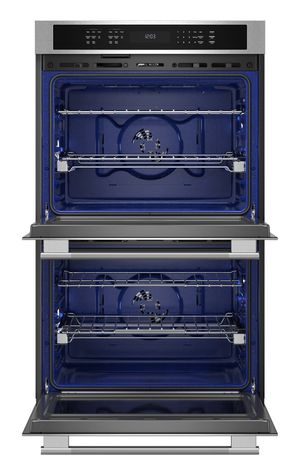
Two cavities, two temperatures, one cutout. This KitchenAid double oven is the holiday-hosting answer, letting a turkey hold at 325 in one cavity while rolls run at 425 in the other, with no porch step involved. The PrintShield finish resists fingerprints on doors that get handled constantly during a big cooking day. KitchenAid also coordinates visually with the rest of its cooking suite, which matters if a matching range or refrigerator is already in the kitchen or on the list.
Top Features
- Double cavity configuration: Two independently controlled ovens for cooking at two temperatures at once.
- PrintShield stainless finish: Fingerprint resistance on doors handled repeatedly during heavy cooking days.
- 30-inch cutout class: Fits the most widely available opening size in modern cabinetry.
- Suite coordination: Designed to match KitchenAid ranges, cooktops, and refrigeration.
Bosch® 800 Series 30” Stainless Steel Electric Built In Double Oven
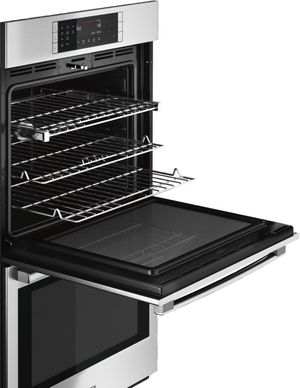
The 800 Series is where Bosch gets genuinely interesting, and this double oven brings European build quality and notably quiet operation to a two-cavity install. Bosch is known for large usable capacity inside the cavity, which is the number that matters when a full-size roasting pan needs air on all sides. For a cook who wants better materials, quieter operation, and understated design without stepping into luxury pricing, this is the sweet spot of the whole lineup. It suits a serious home cook in a remodeled 30-inch opening.
Top Features
- Bosch 800 Series tier: European build quality and design at a moderate premium rather than luxury pricing.
- Double cavity capacity: Two full ovens with usable interior room for large roasting pans.
- Quiet operation: Bosch’s signature strength, noticeable in an open kitchen and living space.
- Understated stainless design: Clean lines meant to recede into cabinetry rather than dominate the wall.
Bosch® 800 Series 30” Stainless Steel Oven/Micro Combo Electric Wall Oven
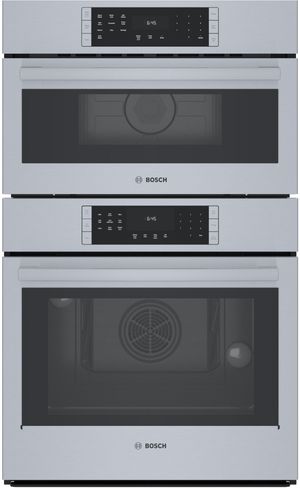
For a kitchen short on counter space, this combination unit is the highest-value move in the group. It puts a full oven and a microwave into one 30-inch cutout, which means the countertop microwave finally goes away and the counter it occupied comes back. On a weeknight the upper cavity reheats and defrosts while the lower stays free for the actual meal. Same Bosch 800 Series build quality and quiet operation as the double oven, with a genuinely different daily use case.
Top Features
- Oven and microwave combination: Two functions in one cutout, freeing the counter space a microwave occupied.
- Bosch 800 Series construction: Premium European materials and quiet operation throughout.
- Weeknight workflow: Upper cavity handles reheating and defrosting while the lower cavity cooks.
- Single 30-inch cutout: Adds microwave capability without requiring a second cabinet opening.
Bosch® 800 Series 30” Stainless Steel Single Electric Wall Oven
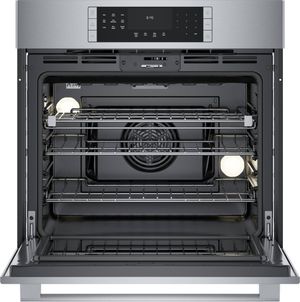
If you want Bosch 800 Series quality but only need one cavity, this is the model that makes the most financial sense in the entire lineup. You get the same European build, the same quiet operation, and the same large usable capacity, in the configuration most kitchens actually need. For a household of two or three that bakes regularly but rarely runs two dishes at two temperatures, spending the budget on a better single oven beats spending it on a second cavity that goes unused. A smart, disciplined choice.
Top Features
- Single cavity, premium tier: Puts the full budget into build quality rather than a second cavity.
- Large usable interior: Bosch cavity capacity accommodates full-size pans with room for airflow.
- Quiet operation: A meaningful daily benefit in an open-plan kitchen.
- Standard 30-inch cutout: Fits the most common modern opening class.
GE Profile™ 30” Stainless Steel Oven/Microwave Combo Electric Wall Oven
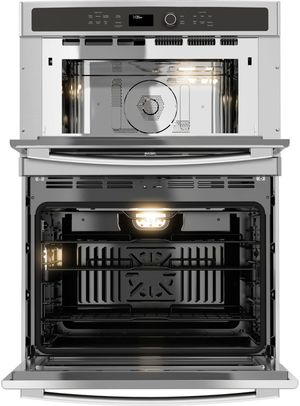
GE Profile is the accessible premium play, and this combination unit shows why the brand keeps landing on shortlists. You get a full oven plus microwave in one 30-inch cutout, GE’s strong smart connectivity for remote preheat and notifications, and the deep parts and service network that comes with the country’s most widely serviced appliance brand. For a household that wants premium capability with local service certainty behind it, this combination is a well-balanced choice at a sensible price.
Top Features
- Oven and microwave in one cutout: Reclaims counter space while adding a second cooking cavity.
- GE Profile premium tier: Strong feature depth at a price below the luxury brands.
- Smart connectivity: Remote preheat and notifications through the brand’s app.
- Broad service network: GE has among the widest technician coverage in central Wisconsin.
GE® 27” Stainless Steel Electric Built In Single Oven

This is the model that saves a remodel. Plenty of central Wisconsin kitchens were built with 27-inch wall oven openings, and when that original unit finally quits, the choice is either a 27-inch replacement or a cabinetmaker. This GE single oven drops into that class, which keeps the project an appliance purchase instead of a construction job. The stainless finish and straightforward electric cavity cover everyday cooking well, and the savings on cabinetry work often exceed the price difference between width classes.
Top Features
- 27-inch cutout class: Fits the narrower openings common in homes built or remodeled decades ago.
- Avoids cabinet modification: Matching your existing width keeps the project simple and far less expensive.
- Electric single cavity: Straightforward, reliable cooking for everyday baking and roasting.
- Stainless steel finish: Coordinates with existing appliances during a partial kitchen update.
Choosing Among the Best Wall Ovens for Your Kitchen
The cabinet cutout sets your shortlist before any brand does, the convection and steam design determines how evenly and how well the oven actually cooks, and the brand choice comes down to price tier, feature depth, and whether someone nearby can service it. Get those three in that order and the decision becomes manageable.
Come compare them in person. Shop wall ovens online at Furniture & ApplianceMart or visit a showroom in the Wausau, Stevens Point, Wisconsin Rapids, Marshfield, or Appleton area and open several brands side by side in one afternoon. Our appliance specialists know cutout requirements and current model differences, we coordinate with installers and electricians so the electrical work happens before the appliance arrives, our crews handle professional installation and haul the old unit away, and our service department is right here in central Wisconsin for the years that follow. That is what buying from an independent Wisconsin retailer means. Stop in or give us a call with your cutout measurements in hand and we will narrow it down together.
Read more:
How to Install a Built In Refrigerator
Top Electric Ranges With Convection, Air Fry, & Smart Features
Frequently Asked Questions
Miele, Bosch, and Wolf consistently rank near the top in independent service-rate data published by sources such as Consumer Reports and by service departments that publish their own repair statistics, though those rankings shift year to year as models change. The more useful question for a specific household is which brands local technicians are certified to service, since response time affects ownership experience more than a national reliability average does.
A wall oven is better for ergonomics and layout flexibility, since mounting the cavity at chest height removes bending and separating the oven from the cooktop frees the cooktop to move to an island. A range is better for cost and simplicity, because it combines both functions in one appliance and requires no cabinetry work, so the right answer depends on whether you are remodeling or replacing.
A single wall oven has one cavity, a double has two full cavities stacked so you can cook at two temperatures at once, and a combination pairs one full oven with a microwave or speed oven in the same cutout. Doubles suit households that host and batch cook, while combination units suit kitchens short on counter space where the microwave needs a permanent home.
Basic installation into an existing matching cutout with a working dedicated circuit is typically a few hundred dollars, while a project requiring cabinet modification or new electrical work can add anywhere from several hundred to a few thousand. Cabinet modification is the most common budget surprise, which is why measuring the finished opening rather than the old appliance face matters so much.
A steam oven is worth it for households that bake bread regularly, cook a lot of fish and vegetables, or want to reheat leftovers without drying them out, since steam preserves moisture in a way dry heat cannot. For cooks who mostly roast and bake conventionally, steam assist on a standard oven delivers most of the practical benefit for a fraction of the price of a dedicated steam or combi-steam unit.
A built-in wall oven typically lasts thirteen to fifteen years, with well-maintained premium models often running longer. Heavy use of high-temperature self-clean cycles and poor ventilation inside a tight cabinet are the two factors that shorten that lifespan most, mainly because both expose the electronic control board to sustained heat.
Why Trust Furniture & ApplianceMart?
For over 55 years, Furniture & ApplianceMart has proudly served Wisconsin and Illinois as a local, employee-owned retailer built on family values and long-term relationships. What began as a customer-first business has grown into the area’s only true one-stop shop for furniture, appliances, and mattresses.
Our mission is to improve the quality of people’s lives by making amazing rooms together. We offer trusted national brands, competitive pricing, and flexible financing options for every budget to make furnishing your home simple and stress-free. We service what we sell with repairs completed by skilled, in-house technicians you can rely on. With a meet or beat price guarantee and a commitment to exceptional service after the sale, we stand behind every purchase.
Shop at Furniture & ApplianceMart
At Furniture & ApplianceMart, you’ll find a wide selection of furniture at competitive prices. From custom furniture to top-brand mattresses and major appliances, we make it easy to shop for everything you need in one store. Ask about clearance and scratch-and-dent savings available at every location, professional delivery and installation, design consultations, appliance repair services, and convenient financing options. Visit one of our showrooms across Wisconsin and Illinois or shop online today.