

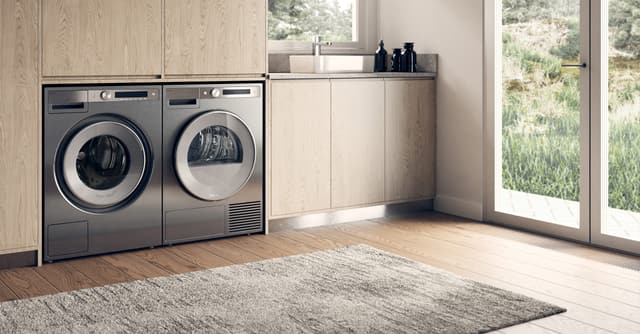
Saturday’s chores end with a pile of laundry that includes a Carhartt jacket stiff with sawdust, two pairs of jeans carrying half the driveway, and a stack of towels from the dog’s bath. It all goes into the same top load washer, and 50 minutes later the jeans come out clean while the jacket comes out wrung into a rope and still damp along the seams. Nothing is broken. That result is the wash system doing precisely what it was engineered to do, which is why the agitator vs impeller decision shapes your laundry day far more than brand badges or sale tags ever will.
Find the Top-Load Washer That Matches Your Laundry
Our team compares wash systems, capacities, and cycle times with central Wisconsin families every week, from basement laundry corners to full mudroom setups. Shop washers, dryers, and matched laundry pairs with delivery, installation, and haul-away handled by our own crews.
Explore agitator vs impeller washersThe good news buried in that wet pile is that these two designs fail and succeed in predictable ways, so the choice comes down to what you actually wash rather than to guesswork. At Furniture & ApplianceMart, our team sizes up laundry rooms across the Wausau, Stevens Point, Wisconsin Rapids, Marshfield, and Appleton areas, including plenty of unheated garages and cold basements, so we know which machine suits which household. This guide covers how each wash system physically moves clothes, how water use and cycle time differ, the loading rules that change between them, capacity per cabinet, fabric wear and tangling, who each design genuinely fits, and where a front load washer beats both.
Key Takeaways
- Two completely different cleaning methods: An agitator rubs and turns clothes against a tall center post, while an impeller spins water and lets garments rub against each other in a shallow pool.
- Water use drives everything else: Impeller washers are high efficiency and use noticeably less water, which is exactly why their cycles run longer and why the drum has to be loaded differently.
- Capacity is a cabinet trade: Remove the center post and the same 27-inch cabinet gains usable drum volume, which is why impeller models handle comforters and sleeping bags more comfortably.
- Neither design wins outright: Heavy work clothes and short cycles favor an agitator, while bulky items, fabric care, and utility bills favor an impeller.
What an Agitator Is and How It Cleans Your Clothes
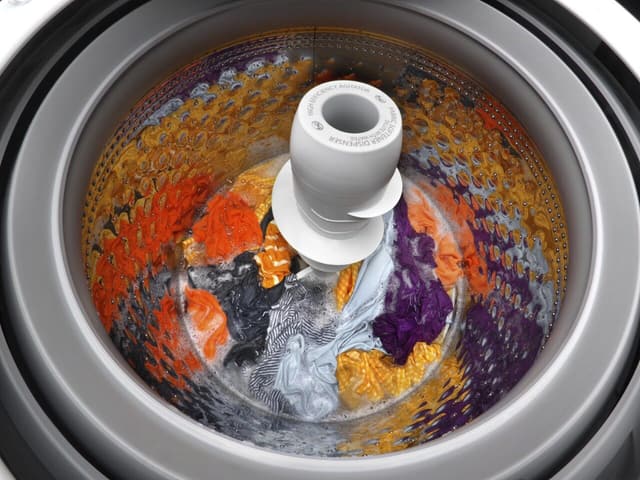
An agitator is the tall post standing in the middle of the wash drum. Most are finned, some are augered with a spiral shape, and many are dual action, meaning the lower half rotates one direction while the upper half turns the other. The drum fills with water deep enough to cover the load, then the post twists back and forth several dozen times a minute.
That motion cleans through direct mechanical force. Clothes are pushed against the fins, dragged through the water, rolled down the outside of the drum, and pulled back toward the center. The post is physically rubbing your laundry, over and over, for the length of the cycle.
Why That Matters on Heavy Soil
Mechanical force is the fastest way to break grease, mud, and sawdust loose from heavy fabric. A top load washer with agitator will usually finish a normal load in 35 to 55 minutes, and the deep-fill water level flushes loosened dirt away instead of letting it circulate.
For central Wisconsin households, that suits a very specific pile of laundry:
- Work jeans, coveralls, and shop rags with ground-in grit
- Field and barn clothing after spring thaw or a wet fall
- Kids’ snow pants, hockey gear, and soccer uniforms
- Anything that has been rained on, salted, or driven through a gravel road
What the Post Costs You
The same rubbing that cleans aggressively is harder on fibers. Sleeves wrap the post, drawstrings knot, and delicate fabrics pill faster than they would in a gentler machine. The post also occupies drum space, so an agitator washer holds less laundry than an impeller washer built into the same cabinet width. A king comforter can wrap the post rather than circulating, which is the classic complaint from owners who wash bedding at home.
What an Impeller Is and Why the Drum Looks Empty
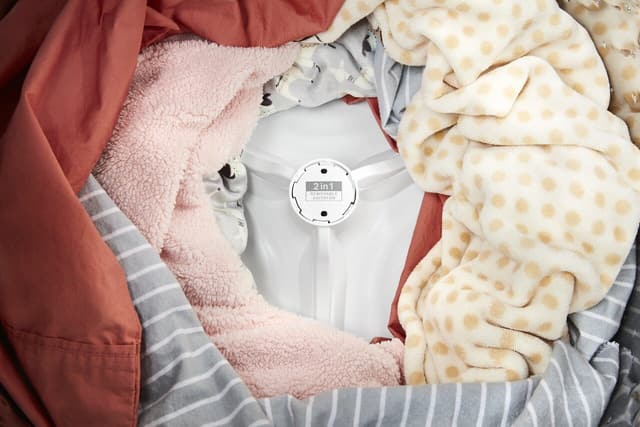
An impeller is not a post at all. It is a low cone, disc, or fin plate mounted flat in the bottom of the drum, often only two or three inches tall. Instead of rubbing garments directly, it spins and pulses to drive the water and to tumble the load, so clothes rub against each other and against a thin film of concentrated detergent solution.
Open the lid on one for the first time and the drum looks strangely empty. That open space is the point. With nothing standing in the middle, the same cabinet holds a larger basket, so a queen or king comforter, a sleeping bag, or a full set of bedding has room to roll instead of wrapping.
Low-Water Washing, Explained Honestly
Impeller machines are high efficiency, and high efficiency means using less water on purpose. Rather than floating laundry in a full tub, the machine wets the load, then works a small amount of highly concentrated detergent solution through it. Less water means less energy spent heating water, and less weight to spin.
There are two honest consequences. First, cycles take longer, commonly 60 to 90 minutes, because chemistry and time replace brute force. Second, the load will not look submerged mid-cycle, which alarms new owners who peek through the lid and assume the machine is malfunctioning.
Impeller washers also need high-efficiency detergent, and less of it than the cap suggests. Too much detergent in a low-water wash creates suds that cushion the load, which reduces the garment-on-garment friction the whole system depends on.
Agitator vs Impeller: A Direct Side-by-Side Comparison
Read this table by finding the row that describes your laundry, not the column that sounds more modern. The right machine is the one whose limitation you can live with.
| Factor | Agitator Top Load | Impeller Top Load |
|---|---|---|
| Wash action | Center post rubs and turns clothes through deep water | Low plate spins water so garments rub against each other |
| Water use | Higher, deep fill covers the load | Lower, high efficiency by design |
| Typical cycle time | About 35 to 55 minutes | About 60 to 90 minutes |
| Capacity in the same cabinet | Smaller, the post takes drum space | Larger, open drum floor |
| Heavy soil performance | Excellent on mud, grease, and grit | Good, often needs a heavy-duty setting |
| Fabric wear | More abrasion, more pilling over time | Gentler on fibers and finishes |
| Tangling | Sleeves and straps wrap the post | Less wrapping, more twisting into a ball |
| Bulky items | Comforters wrap instead of circulating | Handles comforters and sleeping bags well |
| Load balancing | Tolerant of uneven loads | Sensitive, redistributes and adds time |
| Noise and spin | Louder wash action, lower spin speed | Quieter wash, faster spin, wetter to drier |
| Detergent | Regular or HE depending on model | HE detergent required, small dose |
| Typical price position | Entry to mid range | Mid to upper range |
The last row deserves context. Agitator machines dominate the value end of the market because the design is mature and inexpensive to build, while impeller models cluster in the mid and upper tiers where efficiency ratings and larger drums are selling points.
Read more:
How to Choose a Front Load Washing Machine
Standard vs Counter-Depth Refrigerators: What’s the Difference?
The Loading Rules Change Completely Between the Two
This is where most owners go wrong, because the habits that work in one machine actively hurt performance in the other. Loading is not a detail here. It is half of whether you like your washer.
Loading a Top Load Washer With Agitator
Balance is the whole job. Place items around the post in even layers so the load is symmetrical, and keep everything below the top of the post.
- Drop items in loosely around the agitator rather than dumping the hamper in one heap.
- Alternate large and small pieces so heavy items are not stacked on one side.
- Keep jeans, towels, and sweatshirts spread around the perimeter, not piled against the drum wall.
- Leave the top few inches of the post clear so water can circulate over the load.
- Zip zippers and fasten drawstrings so they do not catch and wrap.
Loading an Impeller Washer
The rules invert. Pile the load loosely, evenly, and toward the outside of the drum, because the machine needs garments touching each other to clean.
- Build the load in an even ring, slightly higher at the drum wall than in the center.
- Fill the drum roughly three-quarters full so clothes have room to move.
- Mix garment sizes rather than washing eight bath towels alone, which tends to form one heavy mass.
- Do not press the load down or add water yourself, since the machine senses load weight to set the fill.
- Use HE detergent measured to the load size, not to the cap line.
The Mistakes That Generate Service Calls
- Washing a single heavy item alone, such as a bath mat or one pair of coveralls, which throws the balance off in either machine.
- Overloading an agitator past the top of the post, which stops circulation and leaves detergent residue.
- Underloading an impeller, which gives garments nothing to rub against.
- Using regular detergent in a high-efficiency drum, which creates suds that cushion the wash.
- Assuming a long cycle means a broken machine, when it usually means the washer added time to redistribute an unbalanced load.
Water, Energy, and Cycle Time in a Cold Climate
Water heating is the biggest energy expense in laundry, not the motor. A deep-fill agitator cycle heats and dumps far more water per load than a low-water impeller cycle, and in Wisconsin the incoming supply is genuinely cold for a good part of the year, so every warm or hot wash asks more of the water heater between November and April.
That gap adds up across roughly 300 loads a year for a family. An impeller washer trims water per load, spins faster, and sends noticeably drier laundry to the dryer, which shortens drying time on the other side of the pair. The trade you accept is a longer wash cycle and a machine that is fussier about how you fill it.
Cold-climate laundry rooms add one more wrinkle. Here is the detail our installation crews walk through with anyone putting a washer in an unheated garage or a cold basement: before a long cold stretch, shut off both supply valves, disconnect and drain the fill hoses, run a drain cycle to empty the pump, and add a quart of non-toxic RV antifreeze to the drum. Manufacturers publish that winterizing routine in their manuals for a reason, and a cracked pump housing from a hard freeze is not a warranty repair.
Who Should Buy Which Wash System
Be skeptical of anyone who tells you one design is simply better. They solve different problems, and the honest answer depends on your pile.
An Agitator Fits You If
- You wash genuinely dirty clothes, not just worn clothes, most weeks.
- You want cycles finished in under an hour so laundry day is not an all-day project.
- You like a familiar control panel and a deep-fill option you can reach for.
- Your budget is the deciding factor, since a top load washer with agitator is usually the least expensive path to a new pair.
- You do most bedding at a laundromat or with a service anyway.
An Impeller Fits You If
- You wash comforters, sleeping bags, and mattress pads at home and want them to circulate.
- Your loads are mostly everyday clothing, athletic wear, and linens rather than shop clothes.
- Water and energy costs matter to you over the ten-plus years you will own the machine.
- You want maximum capacity out of a standard 27-inch cabinet.
- You are comfortable adapting to HE detergent and longer cycles.
Plenty of households land in the middle. If you split your laundry between soccer jerseys and barn jackets, the tiebreaker is usually how often the truly filthy loads show up. Weekly means agitator. Monthly means impeller with a heavy-duty cycle.
Agitator vs Impeller Pros and Cons Worth Weighing Before You Buy
Since the top load washers most central Wisconsin shoppers ask about are agitator models, it helps to see that side laid out plainly with the impeller alternative as the comparison point. The strengths are real, and so are the limits. Knowing both keeps you from discovering the trade-off with a comforter wrapped around a post.
Pros
Fast, forceful cleaning
Direct mechanical rubbing pulls mud, grease, and grit out of heavy fabric quickly, which is why work clothes are the classic agitator argument.
Shorter cycles
Most normal loads finish in roughly 35 to 55 minutes rather than the 60 to 90 minutes a low-water cycle commonly needs.
Deep fill you can control
Many models let you add water for heavily soiled loads, which is reassuring if a load looks too dry mid-cycle.
Lower purchase price
Agitator pairs anchor the value end of the market, so the same budget buys a matched washer and dryer instead of a washer alone.
Forgiving about balance
An uneven load is less likely to stop the cycle for redistribution than it is in a sensitive low-water machine.
Cons
Less usable capacity
The post eats drum space, so an agitator model holds less than an impeller washer in the same cabinet width.
Harder on fabric
More abrasion means more pilling, more wrapped sleeves, and shorter life for lightweight or delicate garments.
Higher water and energy use
Deep fill means heating and draining more water per load, which shows up on the utility bill across a decade of laundry.
Read more:
Electric Dryer Maintenance Tips (Lint, Vents & Safety)
Exploring Different Types of Kitchen Vent Hoods
The Third Path: When a Front Load Washer Beats Both
Once people understand the agitator vs impeller trade-off, the next question is almost always about front load machines, and it is a fair one. A front load washer has neither a post nor an impeller plate. The whole drum tilts on its axis and tumbles laundry through a shallow pool of water, letting gravity do what the post or plate does in a top loader.
That design wins on three measures at once. It uses the least water, treats fabric the most gently because nothing rubs against a fixed part, and spins fastest, so clothes arrive at the dryer with less moisture and dry in less time. Front load pairs also stack, which turns a 54-inch wall into a 27-inch closet in a small Wisconsin ranch or an upstairs laundry nook.
The honest limits matter too. You bend to load it, cycles run long, and the door gasket needs wiping and airing between loads or it develops odor. Anyone with back or knee trouble should look hard at pedestals, and anyone who tends to forget wet laundry overnight should know the gasket is less forgiving than a top load lid.
Rank Your Five Toughest Loads Before You Pick a Wash System
Spec sheets do not decide this purchase. The five hardest loads you run in a normal month do, because a washer only has to be great at what you actually put in it and merely adequate at everything else. Write down the five loads that give your current machine the most trouble, whether that is a king comforter that comes out with dry patches, coveralls that come out still smelling like diesel, or a load of towels that leaves the washer soaking wet. Rank them by how often they come around, then score each design against that list instead of against a feature grid. A household whose top two entries are bedding and bulky winter gear should stop reading agitator reviews. A household whose top two are work clothes and kids’ sports gear should stop apologizing for wanting one.
- Bulky bedding, comforters, and sleeping bags: favors an impeller or a front load drum with no obstruction in the middle.
- Heavily soiled work clothing and outerwear: favors an agitator, or an impeller run on a heavy-duty setting with a pre-soak.
- Large towel loads: favors a high spin speed, since water left in terry cloth becomes dryer time and energy.
- Delicates, athletic wear, and anything with straps or drawstrings: favors an impeller or front load, where nothing wraps a post.
- Everyday mixed loads under time pressure: favors an agitator, which finishes a normal cycle noticeably faster.
- Loads run in an unheated garage or a cold basement: favors a machine you can winterize easily and a shorter cycle in a cold room.
Read more:
French Door Refrigerator Buying Guide: Sizes, Features, & Top Models
Why Furniture & ApplianceMart Stands Out Among Furniture Stores in Milwaukee
Top Load and Front Load Laundry Pairs at Furniture & ApplianceMart
Straight talk before the lineup. Every top-load pair below is built around an agitator rather than an impeller, so these are the machines to look at if the comparison above pointed you toward an agitator, and one listing is worth confirming with our team before you buy because its wash system is not spelled out. If you finished the article wanting an impeller model, ask our appliance team or browse the high-efficiency top load washers on our site, because our floor carries both. The front load pairs in this group are the third path covered above, for anyone who decided neither top-load wash system fits.
GE White Top Load Washer & Electric Dryer Laundry Pair
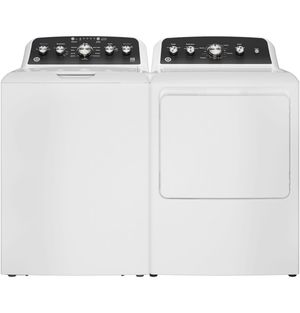
A family running work clothes, towels, and bedding through one machine needs turnover, and that is what this pair is built around. The washer uses a True Dual Action Agitator, which GE describes as giving better circulation and turnover of clothes, and its 4.5 cubic foot drum swallows a full hamper plus towels in a single pass. That puts it squarely in the mainstream family slot of this lineup. Load it in even layers around the post, keep everything below the top of the agitator, and the short-cycle advantage described earlier is yours every laundry day.
Top Features
- True Dual Action Agitator: The upper and lower sections work against each other for better circulation and turnover of clothes.
- 4.5 cubic foot washer capacity: Enough room for a full hamper plus towels, which is the mainstream family size in the top load class.
- Matched electric dryer: The dryer is sized to the washer, so a full wash load does not have to be split before drying.
- Familiar top load convenience: Nothing to bend for, and the lid opens between loads so the drum airs out on its own.
Amana White Top Load Washer & Electric Dryer Laundry Pair
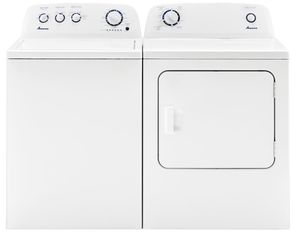
Not every household needs five cubic feet of drum. For a couple, a smaller family, or a basement laundry corner in Stevens Point that shares space with a furnace and a workbench, this Amana pair keeps both the footprint and the price sensible. The washer pairs a High-Efficiency Agitator and Wash System with a 3.8 cubic foot capacity, the compact end of the top load range and the right match for loads sorted a little smaller. Sort by fabric weight rather than by hamper, and the shorter agitator cycle finishes quickly.
Top Features
- High-Efficiency Agitator and Wash System: Agitator wash action paired with a high-efficiency approach to water use.
- 3.8 cubic foot capacity: The compact-capacity option here, well suited to couples, smaller households, and tighter laundry spaces.
- Budget-friendly matched pair: Buying the washer and electric dryer together is the least expensive path to a complete new setup.
- Simple, durable controls: Straightforward dials and cycles instead of a touchscreen, which is what many shoppers actually want.
Electrolux White Front Load Washer & Electric Dryer Laundry Pair
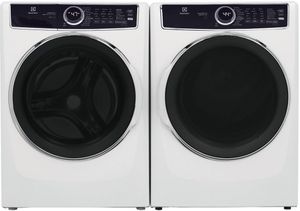
This is the premium answer for a reader who worked through the comparison and decided that neither top-load wash system fits. Electrolux sits at the upper tier of front load laundry, and the tumbling action means nothing rubs your clothes against a fixed post or plate, which is the gentlest fabric care of the three designs. Front load pairs also stack with the manufacturer kit, so a 54-inch wall becomes a 27-inch closet. Wipe the door gasket and leave the door ajar between loads, and this pair rewards you for years.
Top Features
- Front load tumble action: Gravity moves the laundry through a shallow pool, so no post or plate is rubbing the fabric.
- Premium fabric care tier: Electrolux front load laundry targets the shopper who cares most about how clothes look after 200 washes.
- Stackable footprint: With the correct manufacturer stacking kit, the pair fits a closet where a side-by-side setup never would.
- High spin extraction: Front load washers spin out more water, which shortens every dryer cycle that follows.
GE White Front Load Washer & Electric Dryer Laundry Pair
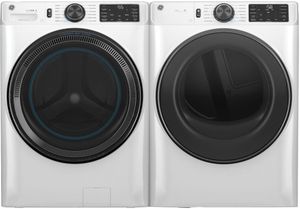
Front load efficiency without the top of the price ladder is what this GE pair is for. It is the mainstream front load choice in this group, aimed at the household that wants the lowest water use and the gentlest wash action but does not need a luxury badge on the door. The same trade-offs covered earlier still apply, so plan on longer cycles and on wiping the gasket. Our crews deliver, install, and level these pairs across central Wisconsin, and leveling matters more on a fast-spinning front load washer than on any top loader.
Top Features
- Mainstream front load pricing: The efficiency and fabric-care benefits of a front loader without stepping into the premium tier.
- Matched washer and dryer: Buying the pair keeps drum sizing consistent, so a full wash load dries in one pass.
- Stack or set side by side: The same pair works vertically in a closet or horizontally in a laundry room with wall space.
- Low water consumption: The least water use of the three wash designs compared in this guide.
Maytag White Top Load Washer & Electric Dryer Laundry Pair
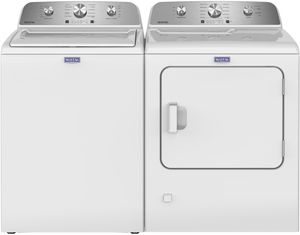
Maytag built its name on machines that keep running, and this is the value workhorse of the top load group here. It is a straightforward washer and matching electric dryer for a household that wants dependable laundry rather than a touchscreen, which describes a lot of central Wisconsin homes. Because wash systems vary across Maytag’s top load line, confirm the exact wash system on the product page or with our appliance team before you buy, since that one detail decides which set of loading rules from this guide you should follow.
Top Features
- Value workhorse positioning: A durable, no-nonsense matched pair aimed at long service rather than feature count.
- Confirm the wash system first: Check the product page or ask our team whether this washer uses an agitator, because loading technique depends on it.
- Matched electric dryer: The washer and dryer are sold as a pair, which keeps capacity and finish consistent.
- Simple operation: Clear controls and familiar cycles, the kind of machine anyone in the house can run correctly.
Whirlpool White Front Load Washer & Electric Dryer Laundry Pair
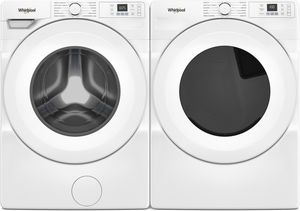
For the shopper who wants front load efficiency at the friendliest entry point, this Whirlpool pair is the practical starting line. It delivers the same core advantages the third-path section described, meaning low water use, gentle tumbling instead of mechanical rubbing, and a strong spin that sends drier laundry to the dryer. Whirlpool parts and service support are widely available, which matters a decade from now. If a tight laundry closet is driving your decision, ask us about the correct stacking kit for this exact pair before delivery day.
Top Features
- Entry point into front load: The most approachable way into tumble washing without moving up to a premium brand tier.
- Gentle on fabric: No agitator post and no impeller plate, so clothing wears more slowly over hundreds of cycles.
- Efficient water use: A shallow wash pool instead of a deep fill, which reduces water heating in a Wisconsin winter.
- Widely supported brand: Parts and local service availability are strong, backed by our own in-house service department.
GE Profile Diamond Gray Top Load Washer & Electric Dryer Laundry Pair
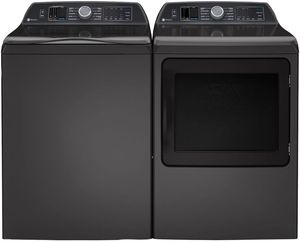
When the household is large and the laundry never stops, capacity ends the debate. This GE Profile pair is the step-up tier here and the largest washer in the group at 5.3 cubic feet, with the wash system listed as an agitator, so you get forceful cleaning and room to work at the same time. That combination answers the usual agitator complaint about drum space, which is real on smaller models. The diamond gray finish also suits laundry areas that are visible from living space rather than hidden behind a door.
Top Features
- 5.3 cubic foot capacity: The largest washer drum in this lineup, which is what a big family or a heavy bedding rotation needs.
- Agitator wash system: Mechanical wash action for the heavily soiled loads that central Wisconsin households actually generate.
- Step-up GE Profile tier: A more advanced control set and finish than the entry models earlier in this group.
- Diamond gray finish: A finished look for laundry rooms and mudrooms that guests walk past.
- Matched electric dryer: Dryer capacity is paired to the washer so large loads do not need splitting.
Making the Agitator vs Impeller Call With Confidence
An agitator rubs clothes clean quickly in deep water and costs less to buy, while an impeller cleans with less water and more time, holds more, and is easier on fabric. Rank your five hardest loads, decide whether cycle speed or capacity and efficiency matters more in your house, and the answer usually picks itself. If neither one fits, a front load pair is the third path.
Come see them run. Shop washers and dryers online at Furniture & ApplianceMart or visit a showroom in the Wausau, Stevens Point, Wisconsin Rapids, Marshfield, or Appleton area to compare drum sizes and wash systems in person. Our appliance specialists will talk through your actual laundry, our own crews handle delivery, installation, and haul-away of the old set, and our in-house service team is right here in central Wisconsin years after the sale. That combination is what an independent Wisconsin retailer gives you instead of a warehouse shipment and a call center.
Frequently Asked Questions
An agitator is a tall finned post in the center of the drum that physically rubs and turns clothes through deep water, while an impeller is a low cone or fin plate at the bottom that spins water so garments rub against each other. That single mechanical difference drives every other contrast between the two, including water use, cycle length, drum capacity, and fabric wear.
An agitator generally cleans heavily soiled items like work clothes, coveralls, and muddy outerwear faster because it applies direct mechanical force to the fabric. An impeller cleans everyday laundry just as effectively using concentrated detergent and more time, so the better machine depends on what you wash most often.
Impeller washers are high efficiency and use far less water, so they replace brute force with time and concentrated detergent solution to get the same cleaning result. Longer cycles are a designed feature of low-water washing rather than a defect, and many models add extra minutes when they redistribute an unbalanced load.
A comforter often wraps around the agitator post instead of circulating freely, which leaves dry patches and can strain the machine. Bulky bedding is one of the strongest arguments for an impeller model or a front load washer, since both offer an unobstructed drum where a comforter can roll.
No, impeller washers are generally gentler because nothing rubs garments against a fixed post, which reduces pilling and wrapped sleeves. Impeller loads can still twist together into a ball when the drum is overpacked, so loading to about three-quarters full keeps fabric moving freely.
Either wash system works in a cold space as long as the machine is winterized the way the manual describes before a hard freeze, though a shorter agitator cycle means less time running in a chilly room. Freeze damage to hoses and the pump is the real risk in an unheated garage or basement, and it is not covered by warranty on either design.
Why Trust Furniture & ApplianceMart?
For over 55 years, Furniture & ApplianceMart has proudly served Wisconsin and Illinois as a local, employee-owned retailer built on family values and long-term relationships. What began as a customer-first business has grown into the area’s only true one-stop shop for furniture, appliances, and mattresses.
Our mission is to improve the quality of people’s lives by making amazing rooms together. We offer trusted national brands, competitive pricing, and flexible financing options for every budget to make furnishing your home simple and stress-free. We service what we sell with repairs completed by skilled, in-house technicians you can rely on. With a meet or beat price guarantee and a commitment to exceptional service after the sale, we stand behind every purchase.
Shop at Furniture & ApplianceMart
At Furniture & ApplianceMart, you’ll find a wide selection of furniture at competitive prices. From custom furniture to top-brand mattresses and major appliances, we make it easy to shop for everything you need in one store. Ask about clearance and scratch-and-dent savings available at every location, professional delivery and installation, design consultations, appliance repair services, and convenient financing options. Visit one of our showrooms across Wisconsin and Illinois or shop online today.