

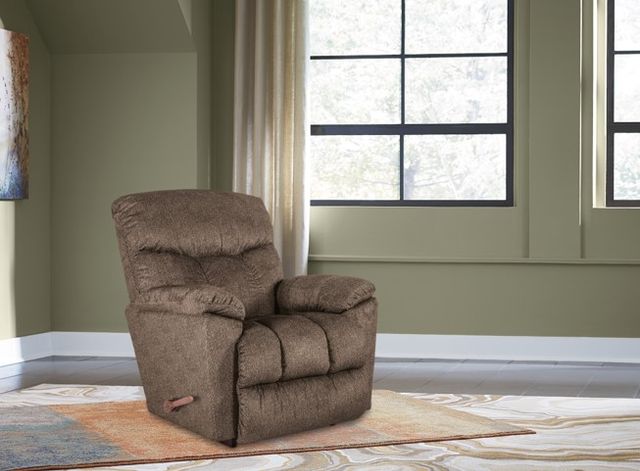
Two chairs sit four feet apart on the showroom floor in the same shade of gray, with the same rolled arms and the same button on the side. One tag reads under seven hundred dollars. The other reads just past two thousand. Nothing visible on either chair explains the gap, and the salesperson who could explain it is three aisles away. That moment is where most shoppers comparing lazy boy recliners stall out, because the differences that matter are inside the frame, under the seat, and in the fabric grade code printed on a tag nobody reads.
Here is the part that makes this simpler than it looks: every one of those price differences traces back to four or five decisions you can learn in ten minutes. At Furniture & ApplianceMart, our showrooms across the Wausau, Stevens Point, Wisconsin Rapids, Marshfield, and Appleton areas let you sit in each mechanism and work the handle yourself before you commit, which is the only reliable test there is. This guide walks through how these chairs are built, the reclining styles and collections, power against manual, upholstery materials, what actually drives price, how to measure a chair to your room, and how to care for the one you bring home.
Find the Recliner That Fits Your Room and Your Body
Our furniture team helps central Wisconsin families match reclining styles, upholstery grades, and mechanisms to real living rooms every week. Shop recliners, reclining sofas, and matched living room groups with delivery, in-home placement, and haul-away handled by our own crews.
Key Takeaways
Style decides fit, not looks: A rocker recliner, a wall recliner, and a lift chair need very different clearances behind and beside them, so the room usually narrows the field before taste does.
- Fabric grade drives price more than color: Two identical-looking chairs can sit hundreds of dollars apart because one wears a higher fabric or leather grade, not because one has more features.
- Power is a mobility answer, not an upgrade: Manual recline is the smarter buy for most healthy adults, while power earns its cost for anyone who struggles to close a footrest or needs infinite stopping points.
- Mechanism and frame outlive upholstery: Spend on the steel mechanism and the frame first, because a well-built chair often needs new fabric long before it needs a new body.
What Sets La-Z-Boy Recliners Apart From Other Reclining Chairs

The price premium on this brand buys hardware you cannot see from the aisle. Underneath the upholstery sits a steel reclining mechanism, a frame built from hardwood and engineered wood, a seat supported by sinuous springs or coils rather than webbing, and cushion cores layered from foams of different densities so the top surface stays soft while the bottom holds its shape.
That layering is the reason a good recliner still feels like the same chair after five years of nightly use. Single-density foam compresses evenly and gives up. Multi-density cores compress in stages, and the dense bottom layer keeps you from sinking into the deck.
The Mechanism Vocabulary You Need Before You Shop
Every conversation about lazy boy recliners eventually turns on four terms, and knowing them keeps a salesperson from talking past you:
- Three-position recline: The chair stops at upright, a middle TV position, and full recline. Simple, durable, and the least expensive.
- Infinite position: Powered models stop anywhere along the range, which matters if your comfortable angle is not one of the three factory stops.
- Chaise-style leg rest: The seat and the leg rest form one continuous surface with no gap under the knees, so your legs are supported end to end.
- Independent back and leg motion: The back reclines separately from the footrest, letting you put your feet up while sitting straight to eat or work.
That chaise leg rest deserves the extra attention. A chair with a gap between the seat and the footrest leaves a shorter person’s calves unsupported and a taller person’s knees hanging in open air. A continuous leg rest fits a much wider range of heights, which is why it shows up across so much of the line.
Why the Mechanism Changes How the Chair Lives in Your Room
National buying guides describe these chairs by style name and stop there. The mechanism matters more, because it decides two things you will live with daily. First, clearance: a standard rocker recliner needs real wall space behind it, while a wall-saver design glides forward on its base and needs only a few inches. Second, effort: a manual footrest has to be pushed closed with your legs, and the heavier and firmer the chair, the more that takes. Ask about the frame and mechanism warranty as a durability signal, and ask our team to confirm the current terms rather than trusting a number you read somewhere online.
La-Z-Boy Recliner Collections and Styles Explained
A collection and a style are two different things, and shoppers mix them up constantly. A style describes how the chair moves. A collection is a design family, offered as a chair and often as matching reclining sofas and loveseats, so a whole room can share one look.
Read more:
7 Wood End Tables for Living Room Layouts Big and Small
8 Best Reclining Sofas for Comfort and Style
The Reclining Styles and Who Each One Suits

- Rocker recliner: Rocks when upright and reclines when you pull the handle. Plan on roughly a foot of wall clearance. Best for dens, nurseries, and family rooms where the chair sits away from a wall.
- Wall recliner: Slides forward as it opens instead of tipping back, so it can sit within a few inches of the wall. The answer for tight condo living rooms and apartments.
- Swivel and glider recliners: Rotate on a base or glide on a smooth track. Ideal when one chair has to face a TV, a window, and a conversation at different times.
- High-leg recliners: Look like a stationary chair on exposed legs and hide the mechanism. Best for formal living rooms where the chair is seen from all sides.
- Power lift chairs: Tilt the whole chair forward to help a user come to standing. A mobility category, not a luxury one.
- Big and tall recliners: Built with wider seats, taller backs, and higher weight capacities for larger frames.
- Reclining sofas and loveseats: The same mechanisms and materials in multi-seat pieces, so more than one person gets the good seat.
Reading the Silhouette Words on the Tag
Tags describe the look in a vocabulary of their own. A scooped back curves in at the sides, a channel back is divided into vertical columns of stitching, and a pillow-top or tufted back adds loose padding or buttoned dimples. Arms come rolled, which is soft and traditional, or track, which is squared and modern. Nailhead trim adds a row of decorative studs along the arm or base.
Match the living situation to the style and the field narrows fast. Limited wall space points to a wall recliner. A shared TV room points to a reclining loveseat instead of two chairs. Mobility trouble points to a lift chair. A chair sitting in the open in the middle of a great room points to a swivel base and a finished back panel.
Power Versus Manual Reclining: Which Mechanism Is Right for You
Think of recline as three tiers rather than a yes-or-no question.
Manual recline uses a side handle or a lever to release the mechanism, and your body weight does the work. Power recline adds a motor and a button, stopping anywhere in the range. Power with adjustable headrest and lumbar adds two more motors, letting you tip the head forward for reading and push the lower back out for support.
The Practical Trade-Offs
- Stopping points: Manual gives you fixed positions. Power gives you every position in between, which matters if your back is particular.
- Closing effort: A manual footrest closes with leg strength. This is the single most common reason a shopper who arrived planning to buy manual leaves with power.
- Power source: Powered chairs need an outlet within reach of the cord, and most accept an optional battery pack if the chair sits away from a wall.
- Outages: During a power failure, a powered chair stops where it is unless it has a battery backup, so plan for that if winter storms take your line down regularly.
Common power upgrades include USB charging ports in the handle, wireless charging pads built into the arm, and memory buttons that return to a saved position. Each one adds cost, and honestly, the USB port gets used far more than the memory buttons do.
Power lift chairs are their own category. The base tilts the entire chair up and forward until the seat meets you at standing height, which turns an impossible transition into a manageable one for someone recovering from surgery or living with knee, hip, or balance limits.
A Straight Rule for Choosing
Buy manual if you are healthy, the chair sits near an outlet or not, and you want the most frame and fabric per dollar. Buy power if closing a footrest is genuinely hard, if you sit in the chair several hours a day and want to fine-tune the angle, or if a headrest that moves independently would keep you off a second pillow. Motors are serviceable parts, and a dealer with its own service department is the difference between a two-week fix and a two-month one.
Upholstery Materials: Fabric, Leather, and Performance Options
Three material families cover almost everything on the floor, and the choice affects daily life more than the frame ever will.
Woven Fabrics
Chenille is soft and slightly fuzzy, and it hides wear well. Microfiber is tightly woven, wipes clean, and resists snagging. Boucle has a looped, nubby texture that reads modern but can catch claws. Tweed and linen-look weaves bring texture and a casual feel, though loose weaves show wear at the arms first.
Fabric grade is the number or letter code on the tag, and it reflects the cost and durability of the cloth itself. Grade drives price far more than color does. Two chairs in the same frame, one in a low grade and one in a high grade, can differ by several hundred dollars while looking nearly identical from six feet away.
Leather and Leather Match
Top-grain leather is the upper layer of the hide, sanded and finished, and it is what people mean when they say leather recliners. Leather match construction puts real leather on every surface your body touches and a carefully matched material on the outside back and sides. That is not a trick; it is a deliberate way to hold cost down on panels nobody sits against. Full leather upholstery uses hide everywhere and prices accordingly. For a chair against a wall, leather match is often the smarter spend.
Performance Fabrics
Performance fabrics are engineered rather than merely treated. Stain release finishes keep spills sitting on the surface long enough to blot, moisture barriers stop liquid from reaching the cushion core, and cleanability codes on the tag tell you what solvents are safe. For households with kids, pets, or a habit of eating in the chair, performance fabric is the upgrade that pays for itself.
Durability signals worth asking about include double rub counts, which measure abrasion resistance, plus pilling resistance, fade resistance for a chair facing a south window, and how a weave holds up to claws.
Matching Material to Your Household
- Sunny south-facing room: Ask for fade-resistant solution-dyed fabric, and keep leather out of direct sun where it dries and cracks.
- Home with a shedding dog: Tight microfiber or performance weave, since hair lifts off instead of weaving in. Avoid loose boucle loops.
- Chair used several hours a day: A higher fabric grade or top-grain leather, because abrasion resistance is what you are actually buying.
- Kids and snacks: Performance fabric with a moisture barrier, every time.
La-Z-Boy Recliner Styles, Materials, and Price Ranges Compared
Find the row that matches your room first, then read across.
| Reclining Style | How It Moves | Wall Clearance | Best Use Case | Typical Price Range |
|---|---|---|---|---|
| Rocker recliner | Rocks upright, reclines back | About 10 to 14 inches | Dens, nurseries, family rooms | Entry to mid |
| Wall recliner | Glides forward as it opens | About 3 to 6 inches | Condos, apartments, tight rooms | Mid |
| Swivel or glider | Rotates or glides on a base | About 10 to 14 inches | Open rooms, corner placement | Mid |
| High-leg recliner | Reclines with legs showing | About 10 to 12 inches | Formal living rooms | Mid to upper |
| Power lift chair | Tilts forward to standing | About 12 to 20 inches | Mobility and recovery needs | Upper |
| Big and tall | Rocks or reclines, wider seat | About 12 to 18 inches | Larger frames, higher weight capacity | Mid to upper |
Prices shift with fabric grade, power upgrades, and current promotions, so treat these as tiers rather than quotes and ask our team to confirm today’s pricing on the exact configuration you want.
What Actually Drives the Price of a La-Z-Boy Recliner
The ladder is easy to see once you know what sits on each rung. Entry-level chairs are manual, in a lower fabric grade, in a standard size. The middle is where power recline, better fabric, and swivel bases live. The top holds full leather, power headrest and lumbar, memory positions, and big and tall builds.
Specific cost drivers, roughly in order of impact:
- Fabric or leather grade, which is the single largest swing
- Power against manual recline
- Power headrest and power lumbar as separate motors
- Memory positions, USB ports, and wireless charging
- Swivel bases and glider mechanisms
- Nailhead trim, contrast welt, and decorative stitching
- Custom order against an in-stock floor model
That last one is worth understanding. An in-stock chair ships from a warehouse and can often be in your living room within days, but you take the fabric it was built in. A custom order lets you choose from hundreds of fabrics and leathers, and the trade is lead time measured in weeks. Ask us for current lead times before you plan around a holiday.
Total cost also includes items that never appear on the tag: delivery, in-home placement in the room you want it, haul-away of the chair it replaces, and optional fabric protection plans. Sale events and financing move the math, and the cheapest tag is rarely the lowest cost per year of use. A four hundred dollar chair replaced in five years costs more per year than a twelve hundred dollar chair still in service at fifteen.
The simplest way to spend well is to put your money in the mechanism, the frame, and the fabric grade, and to save on decorative details. Nailhead trim never made a chair last longer.
How to Measure, Size, and Place Your Recliner Correctly
Measure the chair, then measure the path it has to travel. Skipping the second step is how a chair ends up living in a garage.
- Measure the chair upright: width at the arms, depth front to back, and height at the top of the back.
- Measure the fully reclined depth, which is the number that decides whether it clears your sofa or coffee table.
- Measure wall clearance behind the chair, and add a few inches of margin for baseboard trim and heat registers.
- Measure your delivery path: doorway widths, hallway turns, stairwell landings, and any low ceiling at the bottom of a staircase.
- Confirm outlet location if the chair is powered.
Body fit is a separate set of numbers. Seat height should let your feet rest flat on the floor. Seat depth should let your back reach the cushion without the front edge cutting into the backs of your knees. Back height should support your shoulders, and for taller users the head as well. Sizing tiers run from petite or small-scale through standard to big and tall, and weight capacity is a real published specification worth asking about rather than assuming.
Placement rules are simple but easy to forget. Leave walking clearance around the chair for traffic flow, sit far enough from the TV that you are not craning, and remember that a rocker or swivel base needs side clearance because the chair moves within its own footprint while you use it.
Here is the measuring habit our delivery crews wish more shoppers used: measure the narrowest point of the path, not the doorway. In most central Wisconsin homes the tight spot is not the front door at all, it is the turn at the bottom of a basement stairwell or the hallway corner outside a bedroom, and a recliner is a rigid box that cannot be tipped as freely as a sofa. Measure that turn diagonally, write the number down, and bring it with you.
Lazy Boy Recliners Pros and Cons Every Shopper Should Weigh
This brand sits at a premium tier, and the honest value question is whether the trade-offs line up with your budget, your room, and how many hours a week the chair will actually hold someone.
Pros
Mechanism durability:
Steel reclining hardware and hardwood-and-engineered frames are built for a decade or more of daily cycling, which is exactly where budget chairs fail first.
Upholstery selection breadth:
Hundreds of fabric and leather options mean you can match an existing room rather than settling for the four colors a warehouse happens to stock.
Comfort support that holds:
Multi-density cushion cores and sinuous spring seat support resist the sag that turns a soft new chair into a hammock.
Style range across the same platform:
The same mechanisms appear in rockers, wall recliners, high-leg chairs, lift chairs, and matching reclining sofas and loveseats, so a room can be coordinated.
Serviceability:
Mechanisms, motors, and upholstery are all serviceable parts, which means a problem years from now is usually a repair rather than a replacement.
Cons
Higher upfront cost:
These chairs price above mass-market recliners, and a fully loaded power leather model can cost three times an entry-level manual one.
Custom order lead times:
Choosing from the full material selection means waiting weeks rather than days, which does not suit a shopper who needs a chair before company arrives.
The only way to settle this is to sit down. Work the handle, close the footrest with your legs, and feel the difference between two fabric grades with your hand on our showroom floor.
Caring for Your Recliner So It Lasts for Years
Care is material-specific, and the tag tells you which rules apply.
- Woven fabric: Vacuum the crevices and under the seat cushion monthly with an upholstery attachment, and blot spills rather than rubbing them.
- Performance fabric: Treat spots quickly with the cleaner the code allows, working from the outside of the spot inward so you do not spread a ring.
- Leather: Wipe with a dry cloth regularly, condition once or twice a year, and keep the chair out of direct sun and away from a heat register or wood stove, where hide dries and cracks.
Cleaning codes are simple once decoded. W means water-based cleaners are safe, S means solvent-based only, WS means either, and X means vacuum only with no liquid at all. Using the wrong one is how a small spot becomes a permanent ring.
Mechanism care takes almost no effort. Keep the footrest path clear of throw blankets and toys, never sit or lean on an extended leg rest, and check power cords and transformers for pinching where the chair meets the wall. A mechanism that suddenly feels loose or sounds gritty usually needs a bolt tightened or a pivot lubricated, not a new chair.
A well-built frame frequently outlives its original fabric. When a chair is structurally sound but the upholstery is worn through at the arms, reupholstery or a service call is often the better economic answer than replacement. Protection plans vary widely, so ask specifically what is covered, for how long, whether accidental stains are included, and whether labor is covered along with parts.
A simple rhythm keeps everything on schedule: vacuum monthly, condition leather and check hardware twice a year, and once a year rotate the chair’s position slightly if it sits in strong sun so fading stays even.
Where a Recliner Actually Goes in a Central Wisconsin Living Room
Room planning advice written for a national audience assumes a flat wall, a nearby outlet, and forced-air heat coming from the floor. A lot of homes around Wausau, Stevens Point, and Marshfield do not work that way. Older housing stock here runs heavy to ranches and split-levels with baseboard heat along the exterior walls, finished basements with sloped stairwell ceilings, and great rooms built around a wood stove or a fireplace insert that throws serious dry heat in a direction the chair has to respect. Add south-facing patio doors that reflect snow glare straight into the room for four months a year, and the recliner that fits your floor plan on paper can still be the wrong chair for the actual wall.
- Baseboard heat along the wall: Never block a baseboard element with a reclined chair back. A wall recliner that needs only a few inches still needs those inches to be open air, so measure from the front face of the heater, not the wall.
- Wood stove and fireplace insert clearance: Keep leather and any chair with a power transformer well outside the radiant zone, since dry heat cracks hide and cooks electronics faster than most owners expect.
- Basement stairwell turns: Finished basement family rooms are the most common recliner destination here and the hardest delivery path, so measure the stair landing diagonally before you buy.
- Snow glare from south windows: Reflected winter light is stronger than most people assume. A fade-resistant performance fabric holds color where a low-grade weave will bleach along one arm.
- Cold outside walls: Pulling a chair two or three inches off an uninsulated exterior wall makes a noticeable comfort difference in January and gives a rocker room to move.
- Cabin and seasonal homes: For a chair in an unheated seasonal place, skip the power model. Humidity swings and freezing cycles are hard on motors and transformers.
Read more:
10 Best Ashley Furniture Couches for Cozy Living Rooms
How to Style an Accent Chair in the Living Room
Top La-Z-Boy Recliners Available at Furniture & ApplianceMart
The lineup below is a deliberate cross-section rather than a list of bestsellers. It spans manual rockers at the accessible end, power rocking recliners in the middle, and a fully featured lift chair at the top, so you can see how the decisions covered above translate into actual chairs on our floor.
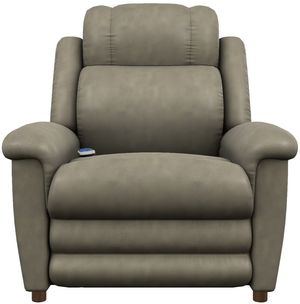
La-Z-Boy® Clayton Charcoal Gold Power Lift Recliner with Massage and Heat
Shop La-Z-Boy Power Lift Recliner
Category: Recliners
For anyone whose knees or hips make standing up the hardest part of sitting down, the Clayton changes the equation. The power lift base tilts the whole chair forward until the seat meets you at standing height, and power recline stops anywhere along the range instead of at fixed positions. Built-in massage and heat add real comfort for stiff backs and long evenings, particularly through a Wisconsin winter. This is the mobility answer in the lineup, and it suits recovery from surgery, ongoing joint limits, or simply making daily transitions easier.
Top Features
- Power lift base: Tilts forward to help the user come to a standing position rather than pushing up from the seat.
- Infinite power recline: Stops anywhere in the range, so the comfortable angle is always available.
- Massage and heat: Built-in comfort features that make long sitting sessions easier on a stiff back.
- Charcoal gold upholstery: A warm, deep neutral that suits a bedroom or a living room equally well.
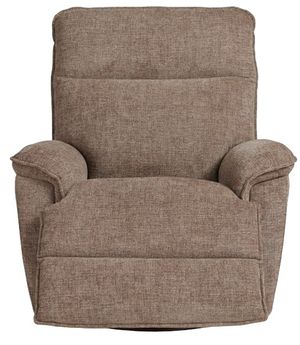
La-Z-Boy® Jay Mushroom Manual Rocking Recliner
Shop La-Z-Boy Rocking Recliner
Category: Recliners
The Jay brings a softer, warmer color story to the same reliable manual rocking platform. Mushroom is a light warm neutral that reads brighter than gray, which makes it a strong choice for a room that runs dark in the winter months or for a space where the chair should blend with tan and cream furnishings instead of anchoring the room. The manual mechanism keeps the price sensible and the maintenance nearly nonexistent. Consider a fabric protection plan if this chair will sit where snacks happen.
Top Features
- Warm mushroom finish: A light neutral that keeps a dim room from feeling heavy, especially in winter.
- Manual rocking recline: Handle-operated recline plus upright rocking, with no outlet required.
- Everyday-use construction: Built on the same frame and mechanism platform as the rest of the manual line.
- Coordinates easily: Pairs with tan, cream, and natural wood furnishings without competing for attention.
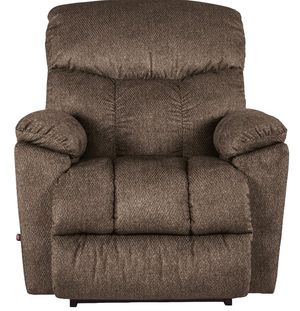
La-Z-Boy® Morrison Cappuccino Manual Rocking Recliner
Category: Recliners
Cappuccino is the practical color choice in this group. A medium warm brown hides pet hair, dog paw marks, and the general traffic of a busy household better than gray or cream ever will, which matters more than any feature list if you have a dog that considers the chair partly its own. The Morrison delivers manual rocking recline on the same platform as the rest of the line, so you get the mechanism and frame benefits without paying for motors. It is the sensible pick for a hardworking family room.
Top Features
- Cappuccino warm brown: The most forgiving color here for pet hair, paw prints, and everyday traffic.
- Manual rocking recline: Rocks upright and reclines with a handle, keeping the cost focused on frame and fabric.
- Family-room durability: Suited to a chair that gets used daily rather than one reserved for guests.
- No outlet needed: Places anywhere in the room without planning a cord run.
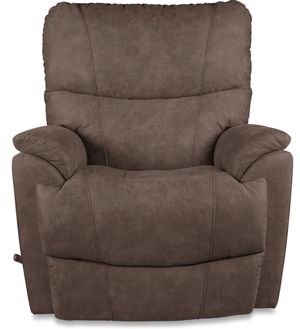
La-Z-Boy® Trouper Mink Manual Rocking Recliner
Shop La-Z-Boy Rocking Recliner in Mink
Category: Recliners
Mink is a deep taupe-brown that sits between the gray and cappuccino options and works as the anchor piece in a room where the sofa is lighter. The Trouper covers the same manual rocking territory with a different silhouette and hand, which is exactly why sitting in more than one chair matters before you decide. Two chairs with identical mechanisms can feel meaningfully different in seat depth and back support. This one rewards a household that wants a slightly richer color without stepping into leather pricing.
Top Features
- Mink deep neutral: A rich taupe-brown that anchors a room with lighter upholstery elsewhere.
- Manual rocking recline: Reliable handle-operated mechanism with upright rocking motion.
- Distinct seat and back geometry: A different feel from other manual rockers in the line, worth testing side by side.
- Fabric at a sensible tier: Richer color depth without moving up to leather pricing.
Bring Home the Right Lazy Boy Recliners for Your Space
The reclining style decides whether a chair fits your room, the upholstery decides whether you still like it in three years, and the feature set decides what it costs. Get those three right and the rest is color. Get them wrong and no amount of comfort makes up for a chair that cannot open against your wall.
Come sit in them. Shop lazy boy recliners online at Furniture & ApplianceMart or visit a showroom in the Wausau, Stevens Point, Wisconsin Rapids, Marshfield, or Appleton area and work every mechanism yourself. Our associates know the material grades and can order a custom configuration in the fabric you actually want, our own crews handle professional delivery and in-home placement in the room where the chair is going, we haul the old chair away, and our service support is right here in central Wisconsin years after the sale. That is what an independent Wisconsin retailer offers instead of a boxed chair on a porch and a call center number. Stop in or give us a call with your measurements, and we will help you narrow the field.
Read more:
How to Customize an England Furniture Sofa
7 Top Leather Sectionals for Families with Kids
Frequently Asked Questions about Lazy Boy Recliners
Lazy boy recliners generally range from a few hundred dollars for an entry-level manual fabric rocker to well over two thousand dollars for a fully featured power leather chair or a power lift chair with massage and heat. Fabric or leather grade and the number of motors drive most of that spread, so the same frame can carry very different prices depending on how it is configured.
A rocker recliner rocks in the upright position and tips backward as it reclines, so it needs roughly ten to fourteen inches of clearance behind it. A wall recliner does not rock and instead glides forward on its base as it opens, which lets it sit within a few inches of the wall and makes it the better choice for condos, apartments, and tight living rooms.
Power recliners are better for anyone who has difficulty closing a manual footrest or who wants to stop at any angle rather than at three fixed positions. Manual recliners are the smarter buy for healthy adults who want the most frame and fabric quality per dollar, since skipping the motors puts that budget into the mechanism and upholstery instead.
Leather wipes clean, resists absorbing odors, and ages attractively, which makes it strong for households with pets that do not scratch and for chairs that see heavy use. Fabric offers far more color and texture choices at a lower price, and performance fabrics with stain release and moisture barriers often outperform leather in homes with young children.
Most rocker and standard recliners need about ten to fourteen inches of wall clearance to fully recline, while wall recliner designs need only about three to six inches because they glide forward as they open. Measure from the front face of any baseboard heater or trim rather than from the wall surface itself, since that trim reduces your usable clearance.
A well-maintained chair from this brand commonly gives ten years or more of daily use, with the steel mechanism and hardwood frame typically outlasting the original upholstery. Keeping the footrest path clear, cleaning by the tag’s code, and keeping leather away from direct heat sources are the habits that push a chair toward the long end of that range.
Why Trust Furniture & ApplianceMart?
For over 55 years, Furniture & ApplianceMart has proudly served Wisconsin and Illinois as a local, employee-owned retailer built on family values and long-term relationships. What began as a customer-first business has grown into the area’s only true one-stop shop for furniture, appliances, and mattresses.
Our mission is to improve the quality of people’s lives by making amazing rooms together. We offer trusted national brands, competitive pricing, and flexible financing options for every budget to make furnishing your home simple and stress-free. We service what we sell with repairs completed by skilled, in-house technicians you can rely on. With a meet or beat price guarantee and a commitment to exceptional service after the sale, we stand behind every purchase.
Shop at Furniture & ApplianceMart
At Furniture & ApplianceMart, you’ll find a wide selection of furniture at competitive prices. From custom furniture to top-brand mattresses and major appliances, we make it easy to shop for everything you need in one store. Ask about clearance and scratch-and-dent savings available at every location, professional delivery and installation, design consultations, appliance repair services, and convenient financing options. Visit one of our showrooms across Wisconsin and Illinois or shop online today.